
CAPABILITIES
Essential Guide to Industrial Contracting
Industrial contracting plays a crucial role in complex environments where every project - whether it's installing a press line or a complete manufacturing plant construction - demands technical precision, skilled project management and specialized expertise. Successful industrial projects need the right blend of engineering, execution and deep operational knowledge to keep plants running smoothly even while new systems are installed or upgraded.
What Is Industrial Contracting?
Industrial contracting refers to construction and engineering services performed in industrial environments like factories, manufacturing plants and distribution centers. These services are typically more complex than commercial contracting due to the scale, safety requirements and integration with critical systems.
These are complex tasks that involve much more than mere physical execution - they require strong planning and experience in how each system interacts with others. Industrial contracting services often take place in manufacturing environments with heavy machinery and must account for operational downtime, safety hazards and highly specialized equipment.
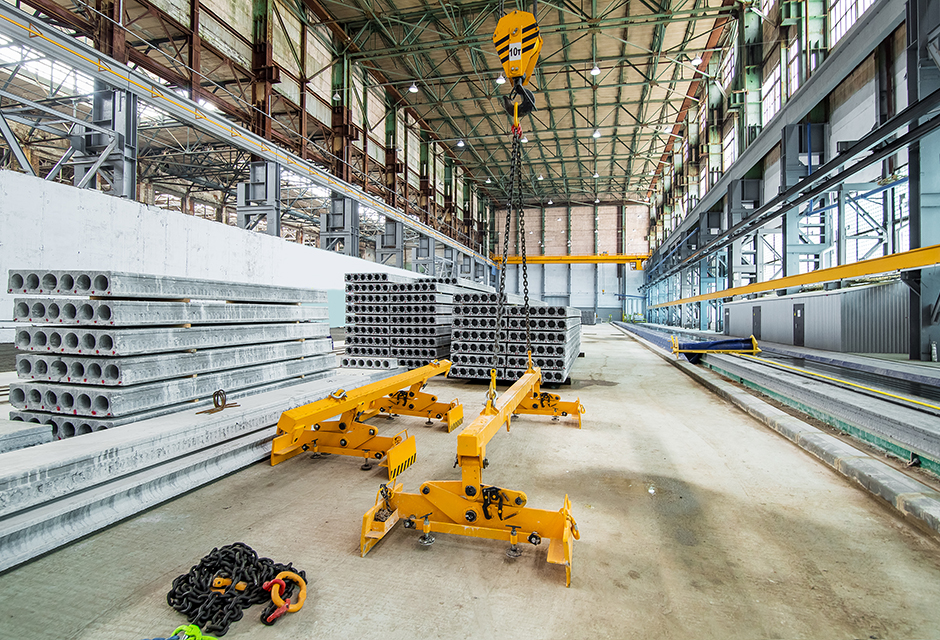
- Rigging and machinery moving
- Foundation and structural concrete
- Electrical and mechanical installations
- HVAC and piping
- Building press pits or raising facility roofs
- Plant relocation and equipment reinstallation
Common Challenges in Industrial Contracting Projects
Whether it's a small upgrade or full manufacturing plant construction, industrial projects face unique challenges that can derail timelines and inflate costs - especially when a number of subcontractors are involved.
- Subcontractor Issues - Multiple subcontractors handling different trades often leads to conflicting schedules, overlapping scopes and miscommunication.
- Communication Breakdowns - With many parties involved, communication can turn into a game of "she said, he said," with costly mistakes and delays.
- Budget Overruns - Inadequate planning, change orders or scope creep can drive costs beyond original estimates.
- Scope Confusion - Projects go off track when responsibilities aren't clearly defined; overlapping roles between trades result in delays and inefficiencies.
- Infrastructure Constraints - Older facilities may not be designed to handle new equipment loads or layouts; floor load capacity, ceiling height or access can complicate installations.
How to Choose the Right Industrial Contracting Company
One of the most effective ways to avoid the pitfalls above is to work with a self-performing industrial contracting company with many years of experience. "Self-performing" means just one industrial contracting firm manages and performs the entire project, from planning and engineering to installation and commissioning.
Companies like Lee Industrial Contracting self-perform across all trades, from engineering to fabrication to foundations and more. This model gives you better coordination, faster project timelines and improved quality control across every step. With a single project manager overseeing all services, you avoid finger-pointing between subcontractors, gain more predictable pricing from owned equipment and trained personnel, and benefit from faster timelines.
- Will all of the people working on the project be your direct employees?
- Will you need to rent equipment for the job or do you own it?
- Do you maintain a tools and supplies inventory large enough to complete this project?
- Can you provide five company references and example projects that demonstrate you are a true self-performing contractor?
- How many people from each trade will you be using on this project? Will you be sub-contracting out any of these trades?
- Have you ever managed a project like mine? What were the outcomes?
Collaboration and Creative Problem-Solving
The most successful industrial contracting and manufacturing facility construction projects are built on trust and transparency. Involve teams early, set well-defined goals, monitor and control progress with tools like Building Information Modeling (BIM), and communicate clearly and often.
Experienced industrial contractors like Lee Contracting have faced countless complex challenges that require creative problem-solving. A real-life example is when one of our customers thought they needed a 12-foot equipment foundation, but after our evaluation, we determined an 8-foot foundation would suffice, saving significantly on costs.
For example, a leading environmental services provider approached us to build and install large, hazardous vault tanks in the ground. Their last rebuild took 24 weeks, but our team members from every trade collaborated to find a more efficient plan. Through our in-house industrial contracting services, we condensed fabrication time from 24 weeks to just three weeks, building the tanks at our facility and transporting them to the customer's plant.
Value Engineering for Better Project Outcomes
Value engineering is a process used to optimize function while reducing cost. Within industrial contracting services, that might mean using a more efficient construction method, substituting materials or finding a faster installation path - all without sacrificing safety or quality.
Lee Industrial Contracting builds value engineering into every phase of the project lifecycle. When clients bring us in early, we can suggest alternatives that deliver the same or better results at a lower cost. For example, our customer hired us to do a complete demolition to fit a piece of equipment, but our value engineering assessment helped us shift plans to a partial roof raise to create necessary machine space while allowing continued operations and condensing the timeline.
Scoping Your Project and Current Trends
When planning manufacturing plant construction or any industrial contracting project, developing a well-defined scope is key. Cover project objectives, expectations and deliverables, standards and requirements, timeline and milestones, and budget and payment terms to align expectations between your team and the industrial contracting company.
The industrial contracting sector is constantly evolving: automation and robotics are seeing increasing adoption in manufacturing plant construction, companies are upskilling labor to close skill gaps, advanced data analytics enable more accurate cost estimates and proactive risk assessments, and modular and offsite construction methods offer greater quality control and resource efficiency.